You’d think a dishwasher would be the one appliance that earns its keep without much fuss. Load it up, press a button, walk away. But if you’ve noticed your dishes coming out with a film on them, food still stuck to the edges, or that slightly stale smell when you open the door, something’s off. And every time you end up rewashing dishes by hand, you’re doubling up on water and electricity for a job the machine should’ve handled the first time around.
The good news? Most of the issues that drag down a dishwasher’s performance are fixable, and a fair number of them don’t require a technician at all. We’ll walk through the practical stuff you can do yourself, explain what’s actually going on inside the machine when efficiency drops, and flag the point where professional servicing genuinely pays for itself.
If your dishwasher hasn’t been cleaning properly for a while and you’d rather skip straight to expert help, Wings Appliance Repairs offers expert dishwasher repairs in Centurion as well as across Midrand and Pretoria. We’ll diagnose the problem and quote you upfront before any work starts.
What’s Actually Using All That Water and Power?
A modern dishwasher uses roughly 10 to 13 litres of water per cycle. Sounds like a lot until you consider that hand washing the same load can chew through 40 to 60 litres. So the dishwasher is already the more efficient option by a wide margin.
Electricity is the bigger expense. Most of the power goes towards heating the water, not running the pump or motor. A typical cycle draws somewhere between 1 and 2 kWh, and with South African electricity rates climbing year on year, that adds up fast.
A dishwasher that isn’t cleaning properly makes it worse, because you end up running second cycles, switching to intensive when normal should’ve been enough, or rewashing by hand with hot water on top.
The Filter Is Almost Always the First Problem
If your dishwasher has been underperforming and you haven’t cleaned the filter recently, start there. It’s the single biggest maintenance task most people overlook, and it makes more difference than almost anything else you can do.
The filter sits at the bottom of the machine, usually beneath the lower spray arm. Its job is to catch food particles so they don’t recirculate onto your clean dishes or clog the drain pump. Over time, those particles build up. Gunky filter, slower water flow, dishes coming out dirty and a machine that smells off. It’s that straightforward.
Cleaning it takes about five minutes. Pull the filter out (most twist counter-clockwise to release), rinse it under warm running water, and scrub off anything stuck in the mesh with a soft brush. Been a while since the last clean? Soak it in warm water with a splash of white vinegar first to loosen the grease and mineral deposits.
Once a month is the standard recommendation. If your household runs the dishwasher daily, check it fortnightly. You’ll notice the difference almost immediately.
Spray Arms: Small Blockages, Big Impact
The spray arms are the propeller-shaped components that spin and distribute water during the wash cycle. Each arm has a row of small holes, and if even a few get blocked, water can’t reach parts of the load. Half your dishes come out spotless, the other half don’t.
Food particles, mineral deposits from hard water, and bits of label or plastic are the usual offenders. Remove the spray arm (they usually lift or twist off), hold it under running water, and clear each hole with a toothpick. Tedious, but effective. If holes keep clogging quickly despite regular cleaning, that can point to a deeper issue worth having a technician look at.
Loading Matters More Than You’d Think
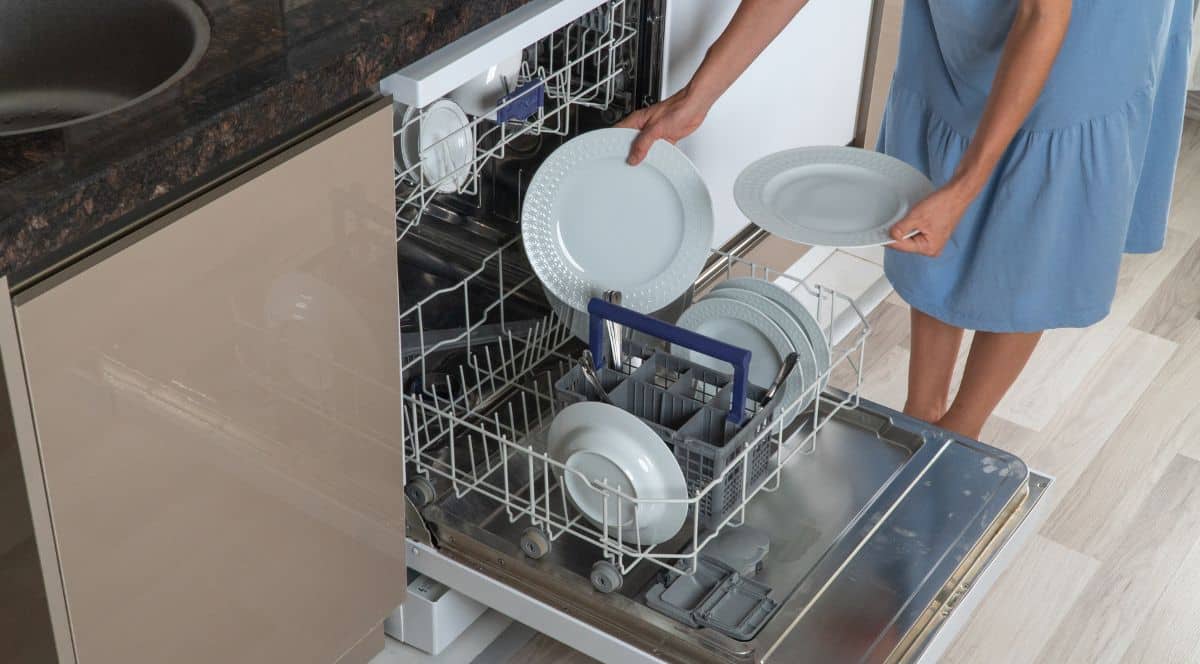
How you stack the dishes has a direct impact on cleaning results and energy use per cycle. Water needs to reach every surface: plates facing the centre, bowls angled on the top rack so water doesn’t pool, tall items along the back and sides, nothing blocking the spray arms or detergent dispenser. Overcrowding forces re-runs, and half-empty loads waste the same water and electricity as full ones.
One habit worth adopting: scrape food off your plates, but skip the pre-rinse under the tap. Modern detergents are designed to break down residue, and pre-rinsing can waste 20 to 25 litres per load for cleaning the machine would’ve handled anyway.
Picking the Right Cycle (Most People Don’t)
Your dishwasher probably has five or six programmes, and most households stick to one. Maybe two. Cycle selection has a real impact on energy consumption though.
Eco cycles run at lower temperatures and use less water. They take longer, but they typically use 30 to 40% less energy than intensive, which is a significant saving over the course of a year if you’re running the machine four or five times a week. For everyday loads? Eco is almost always the smarter choice. Save intensive for the genuinely tough stuff: baked-on casserole dishes, greasy pans. Running it for a load of mugs and lightly used plates is like driving everywhere in first gear.
When Your Dishwasher Needs More Than a Clean
There’s a point where DIY maintenance hits its limit. If you’ve cleaned the filter, cleared the spray arms, and adjusted your loading habits but the machine still isn’t performing, something mechanical or electrical is likely at play.
The most common one we see is a wash pump that’s wearing out and can’t generate proper water pressure anymore. Heating elements also deteriorate over time, which means the water never quite reaches the temperature it needs. Faulty inlet valves and worn door seals are less obvious but just as problematic. None of these faults are visible from the outside, and every one of them drags down both cleaning performance and energy efficiency.
This is where professional servicing pays for itself. A quietly underperforming dishwasher can add hundreds of rand to your annual utility bills, between wasted water, excess electricity, and the cost of rewashing loads that should’ve come out clean the first time. Fix the underlying fault, and the repair often pays itself back within a few months.
At Wings Appliance Repairs, we’ve been servicing dishwashers for over 40 years from a fully equipped repair centre in Midrand. Branded vehicles, a landline you can call during business hours, established premises you can visit. In an industry with too many fly-by-night operators, those details matter.
We collect your dishwasher at no charge, diagnose the issue at our repair centre, and give you a clear quotation before we pick up a single tool.
A Quick Monthly Routine That Pays Off
Fifteen minutes once a month is all it takes. Clean the filter and wipe down the door seals with a damp cloth. Check the spray arm holes for blockages while you’re at it. Then run an empty hot cycle with a cup of white vinegar sitting on the top rack to flush out grease and mineral buildup. Costs almost nothing, and noticeably extends the machine’s working life.
Still Not Getting Clean Dishes?
If you’ve tried the maintenance steps above and your dishwasher still isn’t pulling its weight, it’s time for a professional opinion. Our team at Wings Appliance Repairs has over four decades of experience across every major dishwasher brand, and we’ll give you a straight answer about what’s going on.
Free collection across Midrand, Centurion, and Pretoria. A thorough diagnosis at our repair centre. A transparent quotation before any work begins. Should you choose not to proceed with the repair, a return fee of R550 applies. Request your free quotation todayand let us help you get your dishwasher back to full performance.